

British author Len Deighton, a prolific writer "whose tough, stylish spy thrillers featured on bestseller lists for decades," died March 15, the Associated Press reported. He was 97. His first novel, The Ipcress File (1962), "helped set the tone of cool and gritty 1960s thrillers and was made into a film starring Michael Caine that helped launch both author and actor to long and stellar careers."
 |
|
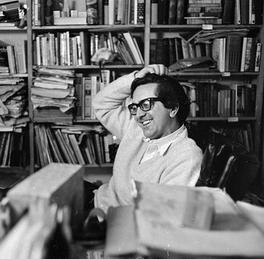
| Len Deighton (David Cairns/Grove Atlantic) |
|
"Len was a Titan," said Tim Bates, his literary agent. "He was not only one of the greatest spy and thriller writers of the 20th century but also one of our greatest writers in any genre. His career spanned a dizzying range of styles and forms, from meticulously researched military history and era-defining thrillers, to epic historical novels and influential food writing. Len was a self-taught polymath, who was as comfortable writing about complex engineering structures as he was describing the best way to make a pot-au-feu. He was also a brilliant illustrator and an accomplished film-maker. Len's writing, in whatever genre, was witty and erudite, often very funny and always very cool. He was truly a master."
Born to a working-class family, Deighton served in the Royal Air Force, studied art, and worked as a waiter, pastry chef and flight attendant before having success as a book and magazine illustrator. His designs included the first U.K. edition of Jack Kerouac's On the Road (1958).
He wrote The Ipcress File to amuse himself during a vacation, the AP noted. The novel went on to sell millions of copies and was adapted into a 1965 film, with Caine "in a star-making performance as Deighton's protagonist, a sardonic working-class sophisticate with a love of gourmet food.... Deighton's depiction of espionage as a grubby, error-strewn business was a contrast to the glamour of Ian Fleming's James Bond novels." "I had never read a James Bond book," Deighton said in a 1997 BBC interview. The Ipcress File was published the month the first 007 movie, Dr. No, was released.
Later books Horse Under Water, Funeral in Berlin, Billion-Dollar Brain, and An Expensive Place to Die all featured the same unnamed hero. Caine, as the character Harry Palmer, starred in movies based on Funeral in Berlin and Billion-Dollar Brain.
Berlin Game (1983) was the first of 10 novels featuring MI6 officer Bernard Samson. Along with Mexico Set and London Match, it was adapted into the 1988 TV series Game, Set and Match. Deighton set several novels in World War II, including Bomber (1970) and SS-GB (1978), the latter of which was made into a TV series in 2017.
Charity, the final book in his trilogy that included Faith and Hope, was released in 1996. Altogether Deighton wrote more than two dozen novels. He also wrote historical nonfiction, including a book about the assassination of President John F. Kennedy, and Fighter: The True Story of the Battle of Britain.
In the late 1990s, Deighton "appeared to switch off his word processor and, without fanfare, retire," the Guardian wrote. "He was to say that, after 30 years of writing and obsessive rewriting and research, he felt he had earned a holiday and enjoyed the experience so much that he stayed on holiday. He did not, however, retire completely, cheerfully contributing forewords and introductions to books by other authors and, in 2006, writing his first short story in 35 years for an anthology to mark the 80th birthday of HRF Keating."
Deighton rarely gave interviews and avoided public appearances at festivals and conventions. He was elected to the Detection Club in 1969, but turned down the offer of a Diamond Dagger for lifetime achievement from the Crime Writers' Association on three occasions, maintaining that "two things destroy writers--alcohol and praise."
The Guardian noted that as a writer, Deighton maintained there was no substitute for sheer hard work, dismissing the idea of writer's block as "the blank wall we secretly know is incompetence" and though he was always associated with the latest technology, he said: "The only implements needed to write a book are pencil and paper, everything else is luxury."
Lars Ole Sauerberg, a professor of literature at the University of Southern Denmark and the author of Secret Agents in Fiction (1984), told the New York Times: "He is the master of the intricately plotted espionage thriller that offers an antihero with his roots demonstrably in the British people, rather than the civil-service aristocracy. I can think of no other writer of secret-agent fiction with a comparable command of the reality behind the clandestine games."